
7Reels payments, cashier methods and transaction status
The payment centre separates card and e-wallet deposits from cryptocurrency transfers and withdrawal routes, with published ranges and estimates.
The payment centre separates card and e-wallet deposits from cryptocurrency transfers and withdrawal routes, with published ranges and estimates.
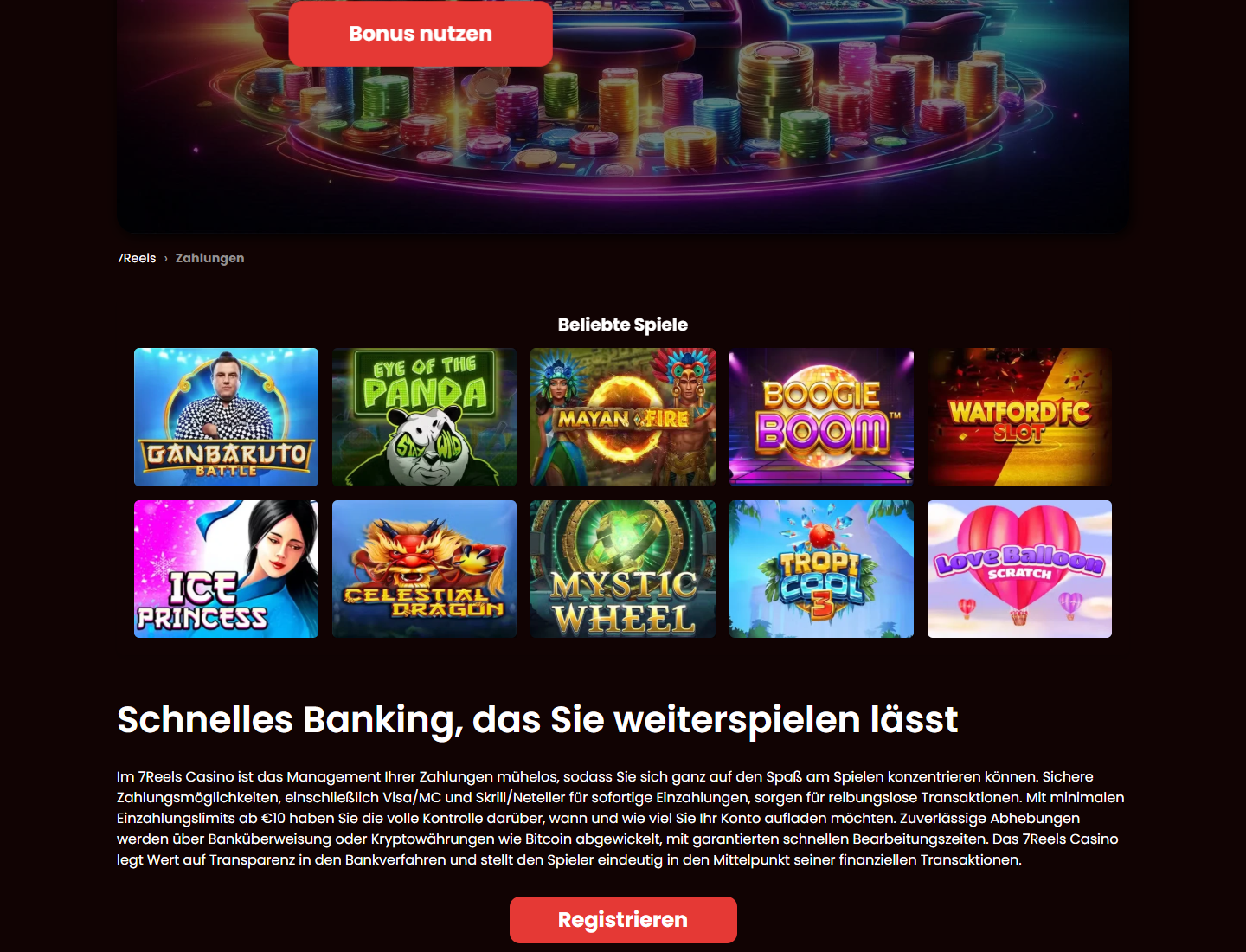
Visa and Mastercard deposits.
Skrill and Neteller methods.
Bitcoin, Ethereum and USDT routes.
Pending and completed transaction states.
| Area | Published detail | Product use |
|---|---|---|
| Visa / Mastercard | 10-5,000 deposit | Published as instant |
| Skrill / Neteller | 10-5,000 deposit | Published as instant |
| Bitcoin deposit | 20 equivalent minimum | About 10 minutes |
| Bank withdrawal | 50-10,000 | About 3-5 days |
| Crypto withdrawal | 20 equivalent minimum | About 1-24 hours |
| Published limits | 5,000 weekly / 20,000 monthly | Cashier information |
Visa and Mastercard are grouped together in the 7Reels payment table. The published deposit range runs from 10 to 5,000 and processing is described as instant. The cashier combines the amount, currency and card confirmation in one flow, then records the result in account transaction history.
Masked card digits allow a previously used method to be recognised without displaying the full number. Pending, completed and declined labels provide a direct transaction state. Country and account currency can determine which card routes appear, keeping the cashier connected to the settings established in the user profile.
Skrill and Neteller are listed with a published deposit range from 10 to 5,000 and instant processing. The wallet handles its own confirmation before returning a result to the casino cashier. This keeps wallet credentials outside the 7Reels login while preserving the final amount in the casino transaction record.
When available for withdrawals, a verified wallet can appear as a masked destination in the same cashier. Requested, approved and completed stages then form one timeline. E-wallets sit between conventional cards and cryptocurrency in the product navigation, giving the payment centre three clearly differentiated method groups.
The payment page describes Bitcoin deposits from the equivalent of 20, with an estimated processing time of about ten minutes and no upper value shown in the published table. The deposit screen can present asset, network, destination address and converted casino-currency value together before a transfer is sent.
Blockchain confirmations appear as a pending state before the balance becomes available. The history entry can retain the original crypto amount and transaction reference beside the credited value. The broader withdrawal content also names Bitcoin, Ethereum and USDT, allowing the cashier to expose the asset and network supported by the account.

Bank transfer withdrawals are published from 50 to 10,000 with an estimated processing period of three to five days. Crypto withdrawals are listed from the equivalent of 20 with an estimate of one to twenty-four hours. Both routes can be followed from request through approval to completion.
Published account limits include 5,000 per week and 20,000 per month. The cashier can display used and remaining capacity beside the withdrawal form. Transaction references, account verification and method availability remain connected to the profile, while the history page records the final date, amount and method.
Deposits and withdrawals are recorded with their date, amount, method and status. Card, e-wallet and crypto entries share one account timeline even though their processing stages differ. Expandable rows can reveal a payment reference and final credited value without turning the mobile screen into a wide table.
Reward history uses a similar structure for available, active, completed and expired offers. Deposit stages, weekly reloads, free spins and cashback remain separate entries. This allows the account holder to connect a promotion to its payment and qualifying game activity while retaining a clear cash-balance view.
The payment information notes that account verification may be requested. A dedicated centre can collect identity, address and payment-ownership files, then label each item as needed, uploaded, under review or approved. Sensitive documents remain inside the authenticated area rather than ordinary support messages.
Verification state can also appear beside a withdrawal that requires additional information. The user can move from the transaction to the relevant document request and back to payment history. This connection between profile and cashier makes account status part of the product interface instead of an unexplained external process.
The published registration flow uses an email address, password, country and selected account currency. Email confirmation activates the profile used by the game lobby, Rewards area and cashier. Login remains a separate header action so existing users do not have to pass through the registration route again.
Country and currency influence the payment methods and values presented in the cashier. Because those settings belong to one profile, balances and transaction history remain consistent across desktop and mobile. Password recovery uses the confirmed email address, while the account area can list profile details and active sessions.
The product presentation names live chat, email and help-centre content as support routes. After login, a support window can use the account identifier and selected language automatically. A transaction reference, game title or reward name can then be added to describe the exact area involved.
Desktop and mobile use the same support history, which prevents a conversation from being tied to one device. Payment questions connect to cashier entries, game questions connect to titles and promotion questions connect to reward cards. This contextual structure is more useful than a generic contact link placed outside the account.
Games, Bonuses, Payments, Mobile and Account are separate pages because each has a distinct information task. Internal links connect a free-spin offer to its game, a deposit stage to the cashier and a mobile transaction to account history. Visitors can move between these subjects without losing the product context.
Seven-Reels.com is structured as an information centre rather than a review. It uses current product screenshots, named games, published promotion details and payment tables to explain the interface. The same navigation appears on every page, with a compact menu replacing the desktop links on smaller screens.
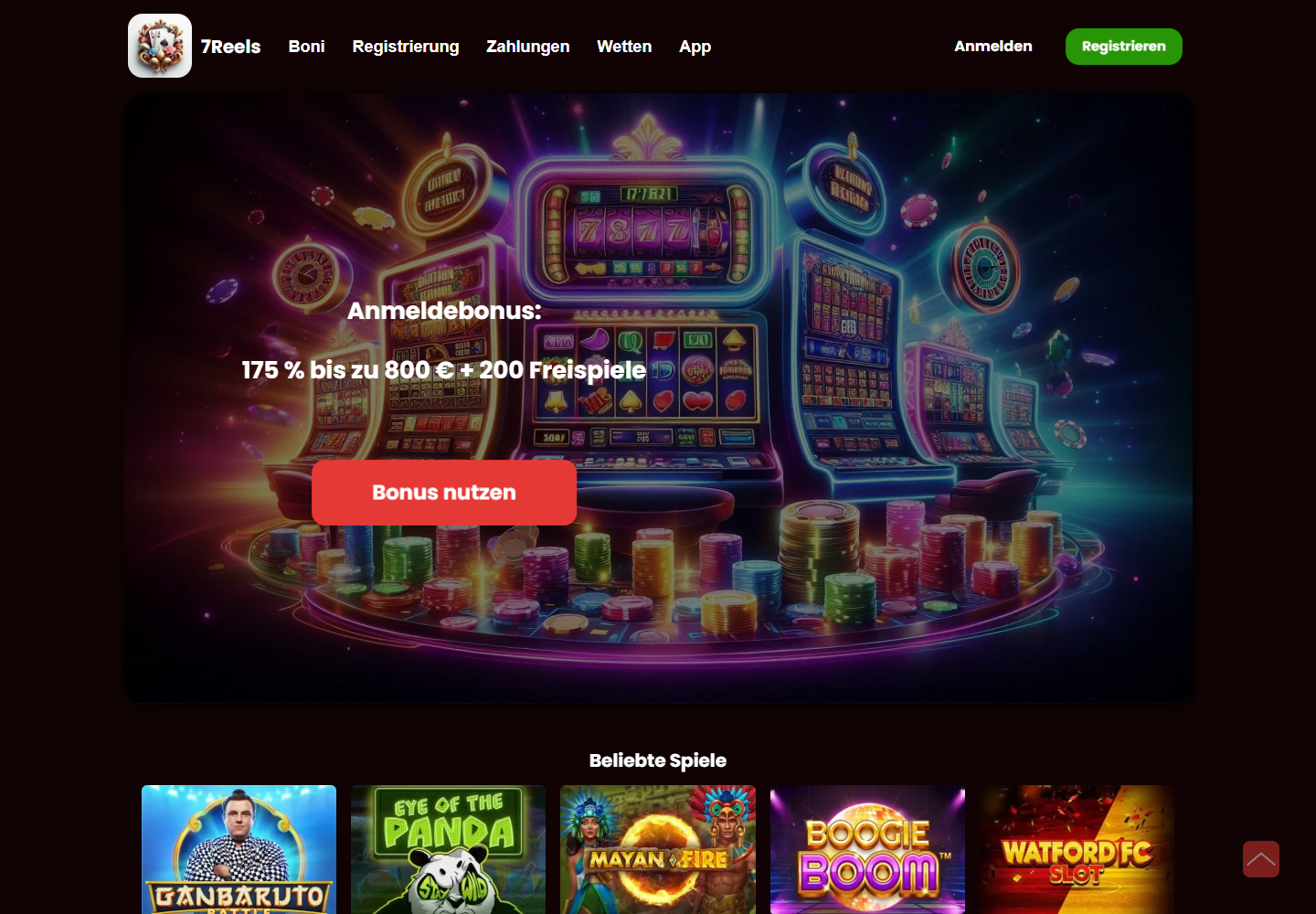
The partner page opens in a new tab with its current product and promotion information.